Side-by-side comparison
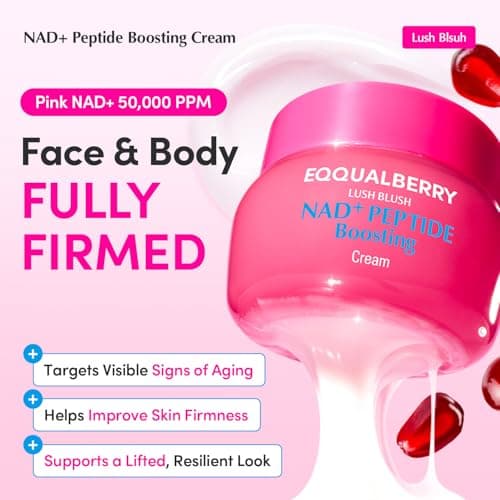
EQQUALBERRY NAD+ Peptide Boosting Cream Review: Korean Anti-Aging Innovation vs Gold Bond Age Renew Neck & Chest Firming Cream Review: Budget-Friendly Anti-Aging Solution
Both products are in Peptide Moisturizer.
Quick Summary
These two products are evenly matched — it's a tie across all metrics.
Verdict
EQQUALBERRY's NAD+ Peptide Boosting Cream offers an innovative approach to anti-aging with its high-concentration actives and neck-focused design. While the premium price reflects the advanced formulation, results are gradual and best suited for committed skincare enthusiasts. The Korean quality and unique ingredient combination make it worth considering for those seeking cutting-edge anti-aging solutions.
Pros
- •High 5% NAD+ concentration with 13 peptides
- •Targets often-neglected neck area effectively
- •Luxurious texture that absorbs well
- •Korean skincare quality and packaging
- •Suitable for face and body use
Cons
- •Premium price point for 50ml size
- •Results take 4-6 weeks to become noticeable
- •May be too active for sensitive skin types
- •Limited long-term studies on topical NAD+ effectiveness

Tied rating
Verdict
Gold Bond Age Renew Neck & Chest Firming Cream offers a solid entry point into peptide skincare at an accessible price. While it won't deliver dramatic anti-aging results, it provides effective moisturization and gentle skin improvement for the often-overlooked neck and chest areas. Best suited for prevention-focused users or those with mild aging concerns who want to try peptide skincare without a significant financial commitment.
Pros
- •Affordable peptide-based skincare option
- •Non-greasy formula absorbs well
- •Dermatologist-tested and hypoallergenic
- •Unscented formula suitable for sensitive skin
- •Generous 2-ounce size provides good value
- •Specifically formulated for neck and chest areas
Cons
- •Results are subtle and take time to appear
- •Lower concentration of active ingredients than premium brands
- •May not be effective for advanced aging concerns
- •Limited clinical studies on specific formulation
- •Packaging could be more hygienic than squeeze tube